Gasoline ATVs and Utility Buggies: A Wholesale Buying Guide for Dealers and Fleet Buyers

Gasoline ATVs, quad bikes and utility buggies are the workhorses of farms, resorts, rental fleets and rural estates — and for dealers, they are a fast-moving wholesale line with repeat demand. This guide covers what to look for when sourcing 4-wheel gasoline vehicles factory-direct, how to match a machine to its real use (farm patrol, sand recreation, estate transport or utility hauling), and what questions to ask a supplier before your first container order.

ATV, quad bike or utility buggy: which do you need?

Dealers often treat these as one category, but each configuration targets a different buyer:

  • Utility ATVs and quad bikes — reinforced frames and off-road tires for farm patrol, fencing, ranch work and property maintenance. Typical buyers: farms, estates, municipalities.
  • Sand ATVs and buggies — built for coastal and desert recreation, often rented by the hour at beach and dune tourism spots.
  • Go-karts and leisure buggies — family recreation and resort activities, popular with rental operators and holiday parks.
  • High-chassis farm transport vehicles — big tires and climbing power for muddy fields and mountain roads; a common utility choice in Southeast Asia and Latin America.

If you already stock remote-controlled mowers or cargo tricycles for the same buyers, adding a 4-wheel line widens every sales conversation — the same landscaper who buys a mower will ask about a utility vehicle for hauling.

What to check before sourcing ATVs wholesale

  • Engine type and size — all current TorqMax utility vehicles are gasoline-powered; confirm the displacement range and fuel economy fit your market’s running costs.
  • Frame and suspension — look for reinforced frames and thick shock absorbers if your buyers ride loaded on rough ground.
  • Seating and layout — 2-seater buggies and single-rider quads serve different rental and utility needs.
  • Certification paperwork — for US dealers, ask about EPA conformity for the engine; EU buyers need CE documentation. TorqMax provides these with export orders.
  • Spare parts and service — a dealer margin depends on parts repeat sales, so confirm the factory stocks consumables (tires, brake parts, filters).

How dealers and rental operators profit from ATV lines

Three proven business models match the machines in this category:

  1. Dealer retail — stock 2-3 models, sell to farms and estates, and collect margin on parts and accessories.
  2. Rental / tour operator — sand buggies and quads rented by the hour at tourism destinations; durability and easy maintenance decide the return.
  3. Resort and estate fleet — utility vehicles for maintenance crews moving tools, produce or guests’ luggage across large properties.

Whichever model you choose, the sourcing logic is the same as any machine line: buy factory-direct, start with one container, verify demand, then scale. Our guide to buying machinery factory-direct walks through OEM branding, MOQ and payment terms step by step.

Current TorqMax ATV and utility buggy range

Full category view: ATVs & utility buggies catalog.

FAQ

Are TorqMax ATVs and buggies gasoline or electric?

All current utility vehicle models are gasoline-powered, which suits remote farms and rental sites where charging is impractical.

Can I get my brand on ATV wholesale orders?

Yes — OEM branding and ODM customization are available on every model; see the OEM/ODM page.

What is the MOQ for ATV wholesale?

MOQ is 1 unit, so dealers can sample a model before committing to container volume.

Do you ship spare parts with orders?

Yes — consumables and spare parts can be included with your order or shipped separately from the same factory.

Which markets buy TorqMax utility vehicles?

Current dealer partners include outdoor equipment dealers in the United States and construction distributors in Indonesia, among 50+ export countries.

Want dealer pricing on the ATV range? Request the wholesale price list — send an inquiry or WhatsApp +86 131 3833 7334.

Last updated: September 7, 2026 — prices, specs and certifications verified with the factory.
How to Buy Machinery Factory-Direct: Wholesale, OEM & ODM Guide for Importers

Buying machinery factory-direct means ordering from the manufacturer — not a dealer, trader or marketplace reseller — to get wholesale pricing, OEM/ODM customization and export support in one contract. For importers, distributors and contractors sourcing remote-controlled mowers, mini dump trucks, concrete mixers, tricycles or utility vehicles, a direct factory relationship typically cuts 20-40% off the landed cost versus going through intermediaries. This guide explains how factory-direct wholesale works at TorqMax, what OEM and ODM actually cover, and how to place your first order without costly mistakes.

What does “factory-direct” mean for machinery buyers?

A factory-direct supplier owns the production line for the machines it sells. TorqMax, for example, builds remote-controlled mowers, tracked dump trucks, concrete mixers, cargo tricycles, skid steer loaders and utility buggies in our own 8,000 sqm plant — so the price you are quoted is the manufacturer price, and customization happens at the source rather than through a distributor who cannot touch the product. The U.S. Small Business Administration recommends vetting suppliers directly when imports form a core part of your business model.

OEM vs ODM: what is the difference?

OEM (Original Equipment Manufacturing) means you take a standard TorqMax model and add your own brand — your logo on the machine, your name in the manual and packaging. ODM (Original Design Manufacturing) goes further: we adjust color, decals, accessories, engine options or even structural details to your specification before branding it as yours. Both routes give you an exclusive product line without building a factory yourself. Many of our landscaping, construction and distribution partners start with OEM branding and move to ODM once their volumes grow.

How to compare wholesale machinery suppliers

  • Factory or trader? Ask for the plant address and video call on the production floor. A genuine factory can show you machines being built.
  • Certifications — for North America, check EPA certificates for gasoline engines (see our EPA import guide); for the EU, CE documentation matters.
  • MOQ and lead time — TorqMax works from MOQ 1 unit for stock models, 15-30 days production.
  • Spare parts support — ask whether wear parts (blades, tracks, filters) ship from the same factory.
  • Payment terms — typical export terms are T/T with a deposit and balance against shipping documents; confirm before production.

Cross-check any supplier the same way you would vet any trading partner — the SBA import/export guidance is a useful starting framework.

What you can buy factory-direct from TorqMax

Category Models Typical buyers
Remote-controlled mowers 400-900mm cut, 224-764cc Landscapers, municipalities, orchards
Mini dump trucks 500-1000kg tracked Construction crews, rental yards
Concrete mixers 200-500L tracked Concrete contractors, hardscape firms
Cargo tricycles 1-3 ton, 150-350cc African & Asian distributors, farms
Skid steer loaders 330-450kg compact Landscaping, construction
ATVs & utility buggies 4-wheel gasoline Farms, resorts, rental operators

How does the factory-direct ordering process work?

  1. Send an inquiry with your models, quantity and destination port — via the contact form or WhatsApp.
  2. Get a quotation within 12 hours (Mon-Sat, GMT+8) with pricing and delivery options.
  3. Confirm specifications — engine, color, branding (OEM/ODM), accessories.
  4. Production starts after deposit; typical lead time 15-30 days.
  5. Inspection & shipment — photos/videos before dispatch, then export packing to your port.

New to importing tracked equipment? Our how-to-order page covers each step, and the FAQ answers payment, shipping and certification questions.

Wholesale buying guides by category

FAQ

What is the minimum order quantity (MOQ) at TorqMax?

MOQ is 1 unit for stock models, which lets importers test the market before committing to volume.

Can you put my brand on the machines?

Yes — OEM branding (logo, manual, packaging) is standard, and ODM changes to color, decals and accessories are available.

Do you provide EPA certificates for US import?

Yes. Gasoline-engine models carry US EPA Certificates of Conformity — see the EPA guide for details.

What are typical production lead times?

Stock models ship in 15-30 days after deposit; custom ODM builds take longer depending on the changes.

How do I know TorqMax is a real factory?

We operate an 8,000 sqm plant in China with over a decade of export history to 50+ countries — visit the About page for the company story and factory photos.

Last updated: September 7, 2026 — prices, specs and certifications verified with the factory.

Ready to source factory-direct? Tell us the models and quantity you need — get a wholesale quotation within 12 hours. Request a quote or WhatsApp +86 131 3833 7334.

SDL764-90A 900mm Remote-Controlled Lawn Mower: Full Walkthrough Video and Review

The SDL764-90A is TorqMax’s 900mm remote-controlled tracked lawn mower, powered by a 764cc LONCIN gasoline engine — built for commercial slope mowing, orchard floors, municipal verges and large estates where a walk-behind machine is unsafe or too slow. This walkthrough video shows the machine in detail: the tracked chassis, the wide 900mm cutter deck, blade engagement, and how the remote control keeps the operator completely clear of the working zone on banks and ditches.

Product images

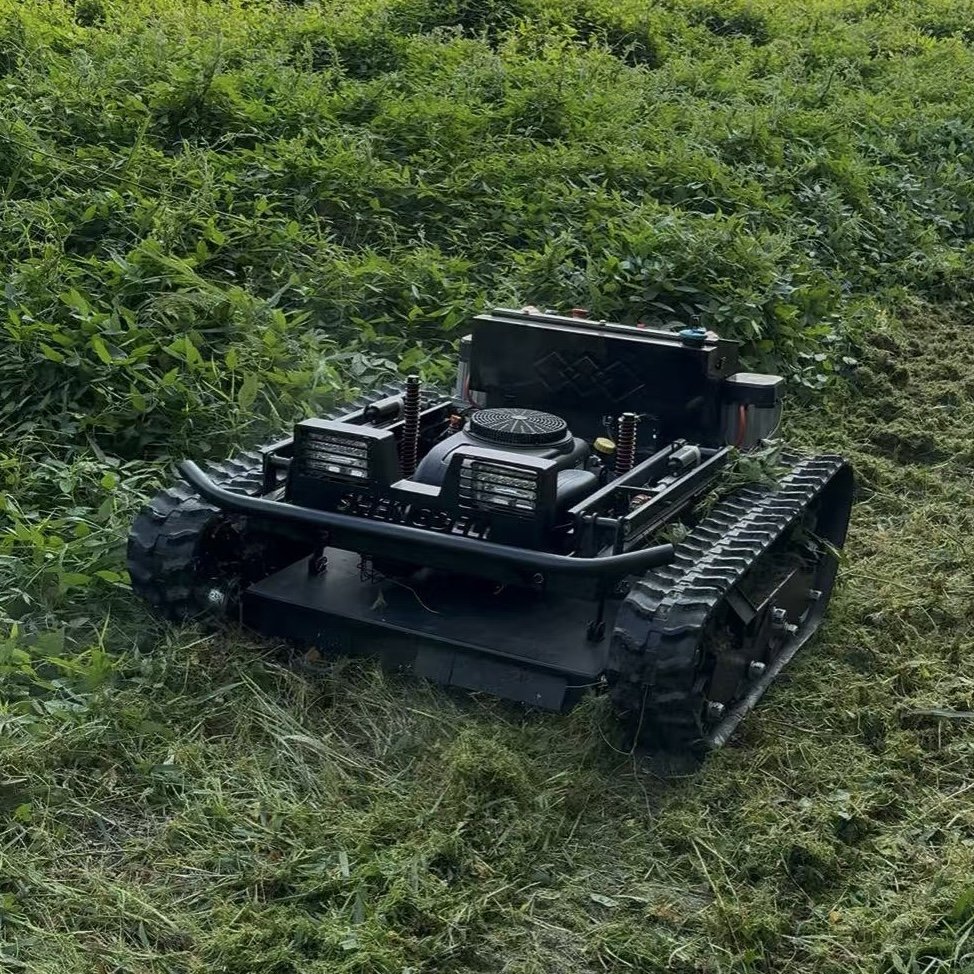
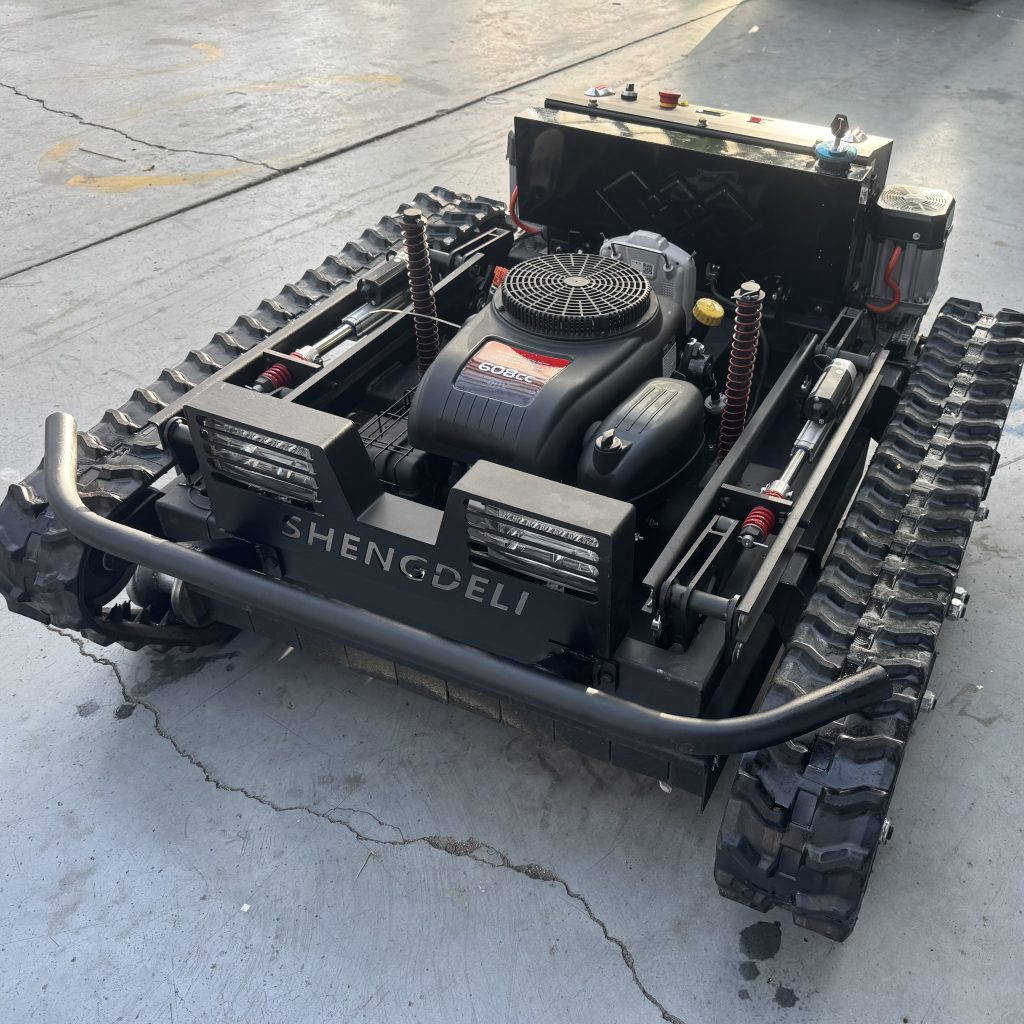
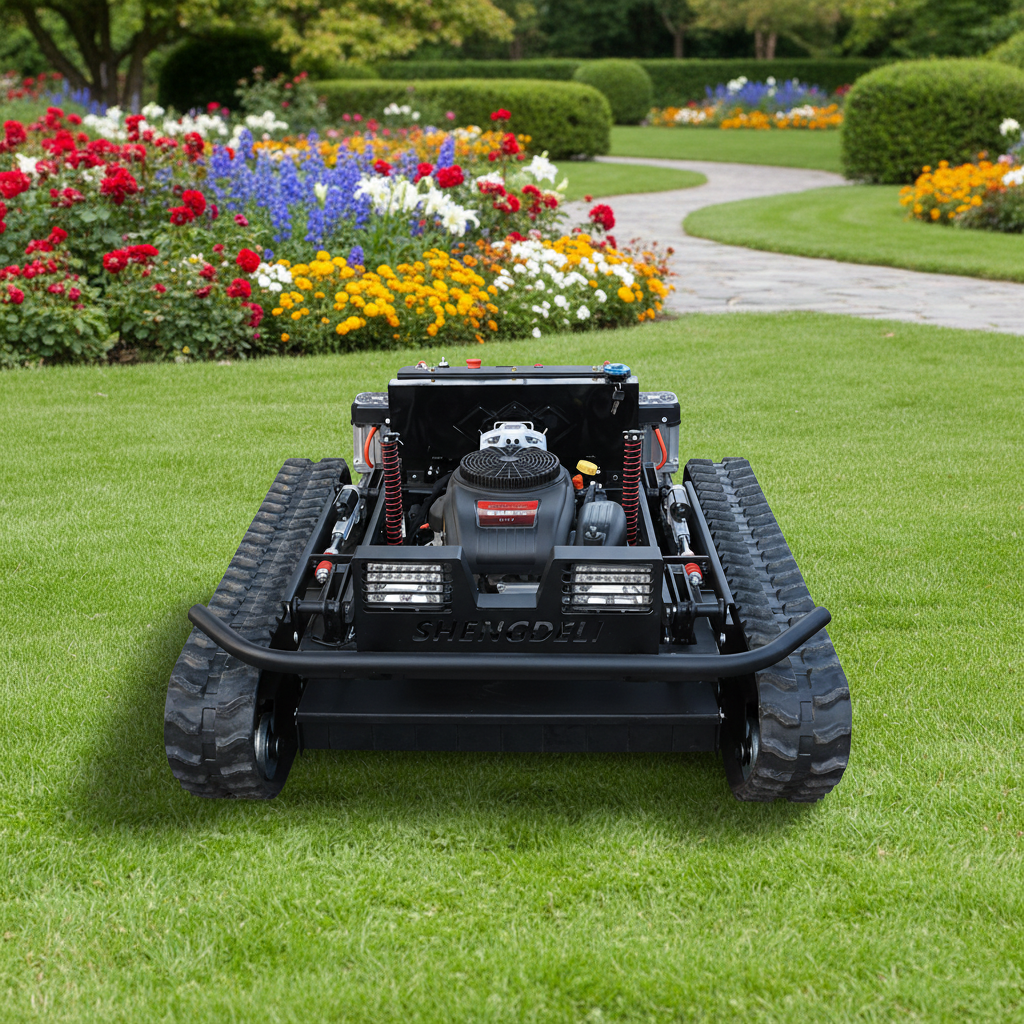
TorqMax SDL764-90A 900mm remote-controlled tracked lawn mower with 764cc LONCIN engine
SDL764-90A 900mm RC lawn mower side view — tracked chassis and cutter deck
SDL764-90A 900mm RC lawn mower detail view

Why a 900mm remote-controlled mower wins on big slopes

The wider the deck, the fewer passes — and on a 30-degree bank, fewer passes means less time exposed to the rollover and slip hazards that injure grounds crews every season. The American Society of Landscape Architects and municipal safety programs consistently recommend remote operation for slope work: the operator stands on level ground, well clear of the blade zone and the fall line. A 900mm deck lets one operator cover an estate or highway verge in a fraction of the time a 550mm or 700mm machine needs.

Video highlights: what the walkthrough shows

The 6-minute walkthrough is a straight, no-narration look at the machine — useful for buyers who want to see the real unit before requesting a quote. Key sections:

  • Tracked chassis and ground clearance — rubber tracks that protect turf while climbing slopes and crossing soft ground.
  • 900mm cutter deck — the widest deck in the TorqMax remote-mower range, with heavy-duty blades for tall grass and light brush.
  • 764cc LONCIN engine — 19kW of power with electric blade engagement; see the EPA guidance on non-road engine emission standards for import compliance.
  • Remote control in hand — range and the safety benefit of operating from the edge of the job.

Specifications at a glance

Cutting width 900mm
Engine 764cc LONCIN gasoline (19kW)
Dimensions 1560 x 1450 x 700 mm
Chassis Steel frame, rubber crawler tracks
Packaging Export wooden crate / pallet
MOQ / Lead time 1 unit / 15–30 days

Who buys the 900mm model

  • Municipal and highway crews — verge and embankment mowing where operator safety rules out walk-behind work.
  • Orchard and vineyard managers — clean mowing under and between trees without scalping or trunk damage.
  • Estate and golf facilities — large maintained areas cut fast by one operator with a remote unit.
  • Landscape contractors — the productivity jump from a 700mm to a 900mm deck pays back quickly on recurring contracts.

How it fits the TorqMax remote-mower range

The SDL764-90A is the top of the 900mm class. For smaller budgets or tighter spaces, see the SDL608-80B 800mm model and the SDL452-80C 800mm mower; for diesel power in the same width class, the SDL195-80B diesel mower runs cooler on long summer days. Our remote-controlled lawn mower buying guide explains how to match cutting width, engine and terrain to your operation.

Related reading

New to remote mowing? Compare remote-controlled vs walk-behind mowers for the safety and productivity case, read the slope and municipal buying guide, or plan the business around it with our guide to starting a lawn care business. Importing to the US? Check the EPA certificate guide first.

FAQ

What is the cutting width of the SDL764-90A?

The SDL764-90A has a 900mm cutting width — the widest in the TorqMax remote-controlled mower range, designed for large slopes, orchards and municipal verges.

What engine does the 900mm mower use?

It runs a 764cc LONCIN gasoline engine rated at 19kW, with electric blade engagement and a tracked chassis for slope stability.

Is the SDL764-90A EPA-compliant for US import?

Yes — like all TorqMax mowers it uses LONCIN engines covered by a current US EPA Certificate of Conformity (TCGPS.2241PC-055).

Can one operator handle the 900mm machine?

Yes — that is the point of remote control. The operator stands clear of the working zone and drives the machine with the handheld remote, which is how municipal crews mow banks safely.

Want the full spec sheet or a quote? Send us your terrain and property sizes — our team recommends the right configuration and quotes factory-direct wholesale pricing within 12 hours (Mon–Sat, GMT+8). Request a quote or WhatsApp +86 131 3833 7334.

Last updated: September 7, 2026 — prices, specs and certifications verified with the factory.
Cargo Tricycle Business: How Transport Operators and Distributors Profit in Africa and Asia

A cargo tricycle is one of the most accessible small-business vehicles in Africa and Southeast Asia — it is a truck, a delivery van and a taxi in one machine that costs a fraction of a four-wheel commercial vehicle to buy and run. Across Kenya, Nigeria, Tanzania, the Philippines and Indonesia, three-wheeler operators move produce to market, deliver goods for shops, haul construction material and carry passengers on routes where vans cannot turn a profit. This guide covers the business models, the right machine for each job, operating economics and how to buy well when importing.

Why cargo tricycles are a strong small-business vehicle

The economics are the story. A 1-ton cargo tricycle costs roughly a third to a fifth of a small pickup, consumes far less fuel, and is cheaper to register and insure in most markets. It also does what pickups cannot: it fits narrow village roads, market lanes and farm tracks, and it keeps working where road quality would punish a larger vehicle. Organizations such as the World Bank’s transport research have long documented the central role of three-wheelers in last-mile connectivity across developing economies.

Three business models that work

  • Market and farm haulage — moving produce, grain and livestock feed between farm, village and market. Seasonal but dependable, with premium rates during harvest.
  • Shop and retail delivery — contracted daily runs for hardware stores, wholesalers and supermarkets. Predictable revenue, low seasonality.
  • Construction material supply — sand, brick, cement and spoil on job sites. Higher wear, but the best daily rates — this is where dump-configuration tricycles earn the most.

Choosing the right configuration

The machine must match the freight. For general sacks-and-crates work a flatbed or non-tipping model is simplest and cheapest to maintain — see how the 1-ton, 1.5-ton and 3-ton models compare in our farm transport guide. For sand, gravel and spoil, a hydraulic dump bed pays for itself in unloading speed; our flat-seat dump vs flatbed buyer review walks through that decision in detail.

Load-bearing guidance from the UN Food and Agriculture Organization on rural transport is a useful reference when sizing machines for farm loads — overloading is the fastest way to shorten a tricycle’s life and raise maintenance bills.

Operating economics: what owners actually earn

Realistic owner-operator figures in East and West African markets: daily gross revenue of $15–$40 for market haulage, $25–$60 for construction supply, with fuel typically 20–30% of revenue on a gasoline single-cylinder machine. Owners running a small fleet of 3–5 tricycles with hired drivers typically clear more per machine than solo operators because the vehicles run daily rather than waiting on one owner’s schedule. Financing and spare-parts availability are the two things to verify before buying — a machine is only as good as the parts chain behind it.

Importing: what to check before you buy

When importing tricycles, confirm three things with the supplier:

  • Documentation — commercial invoice, packing list, bill of lading, and any engine/emission certificates your customs authority requires.
  • Export packing — machines should ship wooden-crate or fully protected against a sea voyage; insist on photos before dispatch.
  • Spare parts — order a first-year spare kit with the machines. A stranded vehicle earns nothing, and local parts for these drivetrains are widely available across Africa and Asia.

For buyers building a fleet, our guide to choosing cargo tricycles for African and mountain-road conditions covers engine sizing, clearance and suspension choices that matter on rough roads.

Related reading

New to the vehicle? Read our farm transport tricycle buying guide for the model range, or watch factory videos showing the tricycles built, tested and delivered. If your plan includes concrete or construction work, our small concrete business guide shows the complementary equipment stack.

More in the TorqMax startup series

FAQ

How much can a cargo tricycle earn per day?

Owner-operator earnings typically range $15–$60 per day depending on market, cargo type and whether you run construction supply, which pays the highest daily rates.

Cargo tricycle or pickup: which is better for a small transport business?

A cargo tricycle costs far less to buy and run and fits narrow roads, making it better for village, market and last-mile routes; a pickup only makes sense for heavy long-distance freight.

What is the best tricycle configuration for construction material?

A hydraulic dump model — the tipping bed unloads sand and gravel in seconds, which is what makes construction supply routes profitable.

Can I import a single tricycle or do I need a container?

Suppliers like TorqMax sell with MOQ of 1 unit, shipping via consolidated or full-container options depending on volume — a single unit usually ships as breakbulk or with other cargo to the nearest port.

Planning a tricycle fleet? Tell us your routes, freight and destination port — our team recommends the right models and quotes factory-direct wholesale pricing within 12 hours (Mon–Sat, GMT+8). Request a quote or WhatsApp +86 131 3833 7334.

Planning a larger order or your own brand? Read the full guide to buying machinery factory-direct — wholesale, OEM and ODM.

Last updated: September 7, 2026 — prices, specs and certifications verified with the factory.
How to Start a Small Concrete Business: Equipment, Pricing and Profit Margins

A small concrete business — paths, patios, footings, pads and small slabs — is one of the most reliable trades to start in construction, because demand is everywhere and the work repeats. Homeowners and small contractors need concrete placed in quantities that are too small for a ready-mix truck but too heavy for wheelbarrows. That gap is exactly where a compact equipment package earns its keep. This guide covers startup costs, the machine setup that works, pricing and the profit math behind small concrete work.

Is a small concrete business profitable?

Yes — small concrete and hardscape work consistently runs 50–70% gross margins when the operator controls both mixing and placing. The economics are simple: you sell installed concrete by the square foot, and your cost per yard drops dramatically once you mix on site with a machine instead of buying bagged mix and hand-mixing. Industry associations such as the American Concrete Institute (ACI) publish the technical guidance every serious contractor should follow for mix design and finishing.

Startup costs for a small concrete operation

The SBA’s startup-cost worksheet is a useful starting point before you commit. A realistic equipment budget for path-and-pad work:

  • Hand-tool and finishing kit (floats, trowels, screeds, forms): $1,500 – $3,000.
  • On-site mixing capacity — the key purchase: $6,000 – $15,000 for a self-propelled tracked mixer that mixes and delivers to the pour point.
  • Material movement: a tracked mini dump truck for aggregate, spoil and bagged cement: $5,000 – $12,000.
  • Total credible launch: roughly $15,000 – $35,000 including insurance and a used truck — low for a construction trade.

Why a self-propelled mixer changes the math

Hand-mixing a cubic yard of concrete takes two people most of a day and burns labor. A ready-mix delivery charges a short-load premium that ruins small-job economics. A self-propelled tracked mixer splits the difference: it mixes 200–500L batches on site and drives the wet mix to the pour point across mud and soft ground.

The SDL200L 200L tracked concrete mixer suits paths, fence posts and footings; the SDL500L 500L model steps up to patios, pads and small slabs. Both run on gasoline engines with tracked chassis — no wheelbarrow chain, no site damage, one operator.

Pricing small concrete work in 2026

Current US market benchmarks for installed small concrete work: paths and walkways $10–$16 per square foot, patios $12–$20, footings by the linear foot, and small slabs $8–$14 per square foot depending on finish and reinforcement. The margin lives in the spread between your on-site mix cost (roughly $120–$180 per yard including cement, aggregate and labor) and the installed price — which is why machine-assisted operators underbid hand-mixers and still earn more per job.

The upsell stack: from paths to full hardscape

Once you own a mixer, adjacent work is natural revenue. Add a tracked dump truck and you can take demolition spoil, gravel base and excavation — the SDL500 mini dump truck moves 500kg loads, and the SDL1000L lift model tips into skips and truck beds for larger sites. Many contractors build the sequence: path today, patio next month, full driveway-and-drainage package by year two.

Legal and safety basics

Concrete finishing is physical work — protect your crew with the guidance in OSHA’s construction standards, particularly around silica dust (wet cutting and cleanup), lifting and machine operation. Check local licensing requirements; most US states require a contractor license once annual revenue crosses a threshold, and insurance is non-negotiable before you pour on anyone’s property.

Choosing between a ready-mix truck and on-site mixing

Ready-mix is right for large pours — slabs over 3–4 yards — where a truck can access the site and the timing works. On-site mixing wins for anything small, remote, or behind buildings where trucks cannot reach. A compact tracked mixer is also useful on sites where a ready-mix truck would tear up the lawn, which is exactly the scenario landscape and hardscape clients care about.

Related reading

Pair this guide with our concrete mixer buying guide for small contractors for model-by-model comparisons, and see 7 job-site combinations of tracked dump trucks and mixers that show how crews use the two machines together. If you are also considering landscaping work, read how to start a lawn care business — concrete is the natural high-margin add-on for landscape companies.

More in the TorqMax startup series

FAQ

How much does it cost to start a concrete business?

A small path-and-pad concrete operation can launch for $15,000–$35,000 including a tracked mixer, mini dump truck, tools, insurance and a used tow vehicle.

Is it better to mix concrete on site or order ready-mix?

For pours under about 3–4 cubic yards, on-site mixing with a self-propelled mixer is faster and cheaper; above that, ready-mix delivery wins on large accessible sites.

Do I need a license to pour concrete?

Licensing varies by US state — most require a contractor license above a revenue threshold. Check your state contractor board and confirm insurance before starting.

What is the profit margin on small concrete jobs?

Gross margins of 50–70% are typical when the operator mixes on site with machinery rather than buying pre-mixed bags and hand-mixing.

Last updated: September 7, 2026 — prices, specs and certifications verified with the factory.

Ready to equip your concrete operation? Send us your typical job sizes and we will recommend the right mixer and dump combination with factory-direct wholesale pricing — quote within 12 hours (Mon–Sat, GMT+8). Request a quote or WhatsApp +86 131 3833 7334.

Planning a larger order or your own brand? Read the full guide to buying machinery factory-direct — wholesale, OEM and ODM.

How to Start a Lawn Care Business in 2026: Complete Equipment Guide and Startup Costs

Starting a lawn care business in 2026 is one of the lowest-cost, fastest-growing small-business opportunities in the United States. The industry is highly fragmented, demand is year-round across the Sun Belt and seasonal in the north, and the barrier to entry with a single mower is real — but so is the ceiling for operators who invest in the right equipment early. This guide covers startup costs, equipment selection, pricing, legal basics and the machinery choices that separate a $50,000-a-year solo operation from a multi-crew company.

Is a lawn care business profitable in 2026?

Yes — but profitability depends on equipment uptime and crew productivity, not just how many lawns you cut. Industry benchmarks shared by the American Society of Landscape Architects and trade publications consistently show gross margins of 40–60% for well-run landscape maintenance firms. The two biggest cost lines are labor and equipment financing, which is exactly why operators who buy factory-direct and run machines hard have a structural advantage.

Commercial mowing rates in most US markets run from $40 to $120 per visit depending on lot size and frequency. A single remote-controlled mower operated by one person can cover estates, highway verges and orchards that would take a walk-behind crew all day — the productivity multiplier is where the margin lives.

Startup costs: what you actually need

The US Small Business Administration recommends a written business plan before any equipment purchase, and for good reason — financing a fleet without one is how operators over-leverage. A realistic equipment budget for a professional start:

  • Entry mowing setup (residential focus): $3,000 – $8,000 — one commercial walk-behind or a compact ride-on plus a trailer.
  • Slope and estate package (higher margin): $6,000 – $15,000 — a remote-controlled tracked mower that lets one operator handle banks and large properties safely.
  • Site-work addition (dumps, grading, small concrete): $10,000 – $30,000 — a tracked mini dump truck and small concrete mixer open up driveway, drainage and foundation work.

Add insurance, a used truck and basic marketing, and a credible professional launch lands between $15,000 and $45,000 — well below most other trades.

The equipment that pays for itself fastest

Not all machines earn equally. The highest-ROI pieces for a growing lawn and landscape company in 2026:

1. A remote-controlled mower for slope and estate work

Remote-controlled mowers are no longer a niche tool — they are the standard answer for ditches, embankments, orchards and highway verges where a standing operator is at risk. The OSHA guidance on struck-by and rollover hazards is exactly why municipalities and commercial mowing crews moved to remote operation: the operator stands clear of the blade zone entirely.

TorqMax builds the SDL608-80B 800mm remote-controlled tracked lawn mower with a 608cc gasoline engine — wide cut, hydraulic blade engagement and hill-climbing tracks. For diesel budgets and heavier growth, the SDL195-80B diesel model runs cooler on long summer days. Both are EPA-compliant for US import (see our EPA certificate guide).

2. A tracked mini dump truck for site logistics

Once you take on driveway grading, drainage or landscape renovation, moving spoil and aggregate by wheelbarrow destroys your margins. A tracked mini dump truck moves 500kg loads across mud and soft turf that would swallow a wheeled barrow. The SDL500 hydraulic mini dump truck is the entry point; the SDL500L with a 1.4m lift tips straight into skips and truck beds, which cuts loading time in half on bigger jobs.

3. A compact concrete mixer for hardscape upsell

Concrete is the highest-margin upsell in landscaping — paths, footings, post bases and pads. Hauling wet concrete by hand caps you at tiny pours; a self-propelled tracked mixer like the SDL200L 200L tracked concrete mixer delivers mix right to the pour point. One machine turns a $400 path job into a $1,800 package.

Slopes, safety and insurance: the modern expectation

Every serious landscape contractor should read the ASLA and Extension resources on slope work before quoting banked properties. The practical shift in 2026 is that clients now ask how you handle slopes — estates, HOAs and municipalities increasingly require equipment that keeps operators off dangerous grades. A remote-controlled tracked mower is not just a safety story; it is a differentiator that wins bids.

Emission rules matter: buy compliant engines

Imported small engines sold in the United States must meet EPA emission standards for non-road engines. Buying from a supplier who can show a valid Certificate of Conformity protects you at customs and from fines. TorqMax machines use LONCIN engines with a current US EPA certificate (TCGPS.2241PC-055), and we publish the importer’s guide to EPA compliance so you know exactly what paperwork to keep.

Pricing your services and growing the roster

Price by the property, not by the hour — hourly pricing caps your income at your own speed. Common 2026 benchmarks: residential mowing $45–$90 per visit, estate mowing with slope work $150–$400 per visit, small concrete paths $12–$18 per square foot installed. As you add equipment, raise the minimum job size and let the machines do the work.

Where to buy equipment: factory-direct vs dealer

Local dealers offer financing and immediate service; factory-direct suppliers offer 20–40% lower acquisition cost and the same parts shipped anywhere. Most growing operators buy their first machine locally and their second one factory-direct once they know the maintenance routine. TorqMax sells wholesale factory-direct worldwide with MOQ of 1 unit, export packing, OEM branding and a 12-hour quote response — useful if you are equipping multiple crews or starting a rental fleet.

More in the TorqMax startup series

FAQ

How much money do I need to start a lawn care business?

A professional residential start typically needs $3,000–$8,000 for equipment plus insurance, a trailer and marketing — roughly $10,000–$15,000 total to launch credibly.

Is a remote-controlled mower worth it for a small company?

If you bid on any slope, ditch or estate work, yes — it removes the biggest safety risk, cuts crew size to one operator and wins contracts that walk-behind crews cannot safely take.

Do imported lawn mowers need EPA certification in the US?

Yes. Gasoline engines in imported equipment must meet EPA non-road emission standards, and a Certificate of Conformity is the documentation that proves it at customs.

How do I grow from solo mowing to a multi-crew company?

Systemize the first service, then add a tracked dump truck and concrete mixer to take on site work — that is where margins double. Hire for labor, keep equipment ownership centralized, and reinvest profit into machines that remove manual work.

Last updated: September 7, 2026 — prices, specs and certifications verified with the factory.

Ready to spec your first or next machine? Send us your property sizes and target services — our team recommends the right configuration and quotes factory-direct wholesale pricing within 12 hours (Mon–Sat, GMT+8). Request a quote or message us on WhatsApp at +86 131 3833 7334.

Planning a larger order or your own brand? Read the full guide to buying machinery factory-direct — wholesale, OEM and ODM.

Tricycle Factory Videos: See Our Three-Wheelers Built, Tested and Delivered

TorqMax builds cargo tricycles, dump tricycles and passenger tuk-tuks for export markets across Africa, Southeast Asia and Latin America. These videos from our factory and from customers show how the machines are produced, tested and used — straight from our production floor, no studio staging.

Watch the videos

A customer riding her new three-wheeled motorcycle right after delivery.

What the videos show

  • Factory production — tricycles being built on our own production line, with export-grade frames and standard components.
  • Customer delivery — a buyer riding her new three-wheeler right after taking delivery, exactly as it left the factory.
  • Real-world use — the machines on roads and sites, not on a showroom pedestal.

Three-wheeler range on this site

On inqulm.com you can browse the models we currently list with full specifications:

Models shown in some social clips that are not yet listed on this site (electric three-wheelers, five-wheel motorcycles) can be supplied on request — contact us with your specification.

Also on social media

We post regular clips of the tricycles on Instagram, TikTok and X — factory shots, uphill tests and customer deliveries. Follow our channels for the latest footage, or send us a message with the model you are interested in.

Buying factory-direct

TorqMax ships tricycles factory-direct from Shenzhen, China — MOQ 1 unit, lead time 15–30 days, export wooden-crate packing, OEM/ODM branding for distributors. Request a quote with your target model and quantity; we reply within 12 hours (Mon–Sat, GMT+8).

Request a Quote

Planning a business around this equipment? Read our guide on how to run a cargo tricycle business — startup costs, pricing and the machines that pay for themselves fastest.

Last updated: September 7, 2026 — prices, specs and certifications verified with the factory.

Remote Controlled Brush Cutter for Slopes: Clearing Tall Grass Without Risk

A remote controlled brush cutter is the safest way to clear tall grass, brush and undergrowth on slopes, ditches and roadside verges — the operator stands clear of the blades while the machine works the ground. This guide covers what to look for, how heavy a job each spec handles, and where a tracked brush mower earns its keep for municipalities, contractors and land managers.

Why remote operation matters on slopes

Walk-behind brush cutters on a steep bank put the operator at risk of slips, kickback and blade contact — and the taller and thicker the growth, the harder the machine pulls. A brush cutter for slopes operated by remote control removes the person from the danger zone entirely, which is the same logic driving remote mower sales to municipalities and maintenance contractors across Europe and North America. On ditch banks, the operator works from the top of the slope; on roadside verges, from behind the barrier. The machine goes where the crew used to go on foot.

Tracked chassis vs wheels

For rough, overgrown terrain, tracks beat wheels on three counts: they grip wet grass and loose soil, they ride over small obstacles and hidden stumps instead of hanging up on them, and they spread the machine’s weight so it does not sink into soft ground. A tracked brush cutter also turns on the spot, which matters in tight verges and tree lines where a wheeled machine needs room to maneuver. If the job site is genuinely rough — old pasture, reverted ditches, abandoned plots — tracked running gear is not a luxury; it is what keeps the machine moving.

Engine and cutting width: sizing the job

The TorqMax SDL900 carries a 900mm clearing width and a Changchai 192F diesel engine — enough torque to chew through thick stems and heavy growth without stalling. The 900mm deck clears roughly a third more ground per pass than a 600-700mm machine, which is the productivity argument on large verges and reclamation sites. Diesel is the right fuel for sustained professional use: better fuel economy, longer service life, and none of the carburetor storage problems that gasoline engines develop between jobs. The machine also runs 2400W of drive motors through its tracked chassis, keeping forward power available even in dense growth.

See the 900mm remote-controlled tracked brush cutter (SDL900) for full specifications.

Typical applications

  • Roadside verges and embankments for municipalities
  • Drainage ditch banks and canal slopes
  • Orchard and vineyard undergrowth between rows
  • Vacant lots and land reclamation sites
  • Hillside fields being brought back into use
  • Utility and pipeline corridors needing annual vegetation control

For land managers, the common thread is ground that is too steep, too rough or too overgrown for a standard mower — exactly the work that previously meant hand-held brush cutters and a crew on the bank.

What to budget beyond the machine

  • Blades — heavy brush wears blade edges fast; keep a spare set on hand.
  • Track maintenance — check tension and wear on abrasive terrain.
  • Diesel servicing — simple periodic service (oil, filters) keeps the 192F running for years.
  • Safety kit — hearing protection and site signage for crew working near the operation.

Buying factory-direct means blades, tracks and engine parts ship from the same plant as the machine — no third-party sourcing when a blade breaks mid-contract.

Import notes: EPA and CE

Like all TorqMax gasoline and diesel equipment, the brush cutter ships with the export documentation your market needs — request the EPA certificate for US-bound diesel models or CE documentation for European destinations with your quote. See the EPA certificate importer guide for what to verify before the PO.

Frequently asked questions

How steep can a remote brush cutter work? Tracked remote machines hold slopes well past the angles a hand-held operator should attempt; remote operation keeps the person off the bank entirely.

What thickness of growth can the SDL900 clear? The 900mm deck with the Changchai 192F diesel engine chews through tall grass and woody undergrowth up to the practical limits of the blade system — the right machine for reverted and overgrown ground.

Is diesel better than gasoline for a brush cutter? For sustained professional use, yes — better fuel economy, longer service life and no carburetor storage issues.

Can the brush cutter be OEM-branded? Yes — branding, colors and packaging can be configured for distributors and municipal tender suppliers.

What is the MOQ? MOQ is 1 unit, with lead time 15-30 days and export wooden-crate packing.

Ready to spec a brush cutter for your terrain? Tell us the ground conditions and area — we reply within 12 hours (Mon-Sat, GMT+8) with a model recommendation and factory-direct pricing. Request a quote or WhatsApp +86 131 3833 7334.

Related reading

Last updated: September 8, 2026 — prices, specs and certifications verified with the factory.

Buying Cargo Tricycles at the Factory: Flat-Seat Dump vs Flatbed — Buyer Review

Choosing between a tricycle flat-seat dump and a tricycle flatbed comes down to one question: what are you hauling? Both are 1-ton three-wheelers, but they are built for different jobs. This post covers both models, the factory visit video, and what an actual wholesale buyer had to say after placing their first order.

Watch the buyer’s factory visit

Tricycle Flat-Seat Dump — the construction hauler

The Tricycle Flat-Seat Dump carries a 1-ton payload with a tipping bed — ideal for sand, gravel, manure and demolition spoil. The driver sits on a flat seat behind the load, which keeps the center of gravity low on rough tracks. When the bed tips, the whole load comes out in seconds instead of a shovel at a time.

  • 1-ton payload with single-cylinder gasoline engine
  • Tipping dump bed — fast unloading on site
  • Flat-seat driving position — low center of gravity, stable on farm tracks
  • Best for: construction hauling, agriculture, market deliveries of bulk goods

Tricycle Flatbed — the general freight carrier

The Tricycle Flatbed is the same 1-ton chassis with a fixed flat platform — no tipping mechanism, more simplicity, and a bigger usable deck for stacked cargo. It suits sacks, crates, timber, building materials and mixed loads that do not need to tip.

  • 1-ton payload, fixed flatbed deck
  • Simpler drivetrain — fewer moving parts, lower maintenance
  • Best for: general freight, sack goods, timber, market runs, farm logistics

Flat-seat dump vs flatbed: which to buy?

Criteria Flat-Seat Dump Flatbed
Payload 1 ton 1 ton
Bed Tipping dump Fixed flat deck
Best for Sand, gravel, spoil, manure Sacks, crates, timber, mixed freight
Maintenance Standard Lower (no tipping mechanism)

Many distributors buy both: the dump for site work and the flatbed for market and farm runs. Buying the pair at once also qualifies for better freight consolidation on a shared container.

What a first-order buyer said

“We came to the TorqMax factory looking for one cargo tricycle and left with two — a flat-seat dump for our construction customers and a flatbed for general freight. The machines are exactly as specified: solid frames, proper 1-ton capacity, easy starting. What impressed us most was the inspection process — every unit is test-run before packing, and the export crating is genuinely sea-freight grade. Our first container arrived without a single damaged part, and the spare-parts list made local servicing simple. We have since reordered twice.”

— Wholesale distributor, East Africa (first order: 2 units, 2026)

Why buyers choose factory-direct

TorqMax ships tricycles factory-direct from Shenzhen, China with MOQ 1 unit, 15–30 day lead time, export wooden-crate packing, and OEM/ODM branding for distributors building their own label. Ask about container consolidation when ordering multiple models — it cuts per-unit freight significantly.

Request a Quote

Planning a business around this equipment? Read our guide on how to run a cargo tricycle business — startup costs, pricing and the machines that pay for themselves fastest.

Last updated: September 7, 2026 — prices, specs and certifications verified with the factory.

Compact Tracked Skid Steer Loader: What a 330-450kg Mini Loader Can Do

A compact tracked skid steer loader is the machine that fits where full-size loaders cannot — through a 90cm doorway, down a greenhouse aisle, across a finished lawn. In the 330kg–450kg class, it replaces manual labor for grading, excavation, material handling and cleanup on small and medium sites.

What the 330kg and 450kg classes handle

The SDL330 (330kg operating capacity) is the entry point: light grading, soil moving, aggregate handling and greenhouse work. The SDL450 (450kg) adds reach and breakout force for heavier landscaping, excavation and backfilling. Both run on rubber tracks, so they work on soft ground and finished surfaces without leaving ruts.

Mini skid steer vs full-size loader

A mini skid steer with tracks trades a little bucket capacity for access and ground pressure. On a typical residential landscaping job — grading a yard, moving topsoil, loading a trailer — the compact loader completes the work in the same time because it does not waste trips getting into position. On a construction site, it handles cleanup and trench backfill while the big machine works the main cut.

Where a small tracked loader earns its keep

  • Landscaping — grading, topsoil spreading, mulch and paver handling on lawns you cannot tear up
  • Excavation support — trench backfill, spoil removal and leveling on confined sites
  • Greenhouse and nursery — narrow aisles, soft floors, daily material moves
  • Demolition cleanup — loading rubble into skips where a big machine cannot reach
  • Farm work — manure, feed, gravel and muck-out work around buildings

Grading and leveling

With a leveling bucket or blade, the compact loader does fine grading for paths, pads and stable floors. The tracked chassis holds a consistent cut on soft ground, and the operator sees the work directly — no spotter needed on most jobs. For a small skid steer for grading and leveling, the 330–450kg class is the practical sweet spot.

Buying factory-direct

TorqMax supplies compact tracked skid steer loaders factory-direct from Shenzhen, China. MOQ 1 unit, lead time 15–30 days, export wooden-crate packing, 12-month warranty and full spare parts support. Wholesale and OEM/ODM available. Send your target capacity and attachments for a CIF/FOB quote within 12 hours (Mon–Sat, GMT+8).

Request a Quote

Planning a larger order or your own brand? Read the full guide to buying machinery factory-direct — wholesale, OEM and ODM.

Last updated: September 7, 2026 — prices, specs and certifications verified with the factory.

Frequently asked questions

How much can a 330kg-class loader lift? The SDL330 carries a 330kg operating capacity — the entry point for light grading, soil moving and greenhouse work. The SDL450 steps up to 450kg for heavier landscaping and backfilling.

Will tracks damage a finished lawn? No — rubber tracks give low ground pressure, which is exactly why these loaders work on turf and soft ground where wheeled machines leave ruts.

What attachments are available? Buckets, grading blades and material-handling attachments are available; tell us your target work and we will confirm the matching setup.

Is a compact loader worth it for landscaping? On any site with regular grading, topsoil or mulch work, the compact loader replaces sustained manual labour and typically pays back within a season of commercial use.

Can I order OEM/ODM? Yes — capacity options, attachments, branding and packaging can be configured for distributors and fleet buyers.

Related guidance: the U.S. Small Business Administration covers equipment planning for landscaping and construction businesses — useful when building the case for your first compact loader.